Three Editions
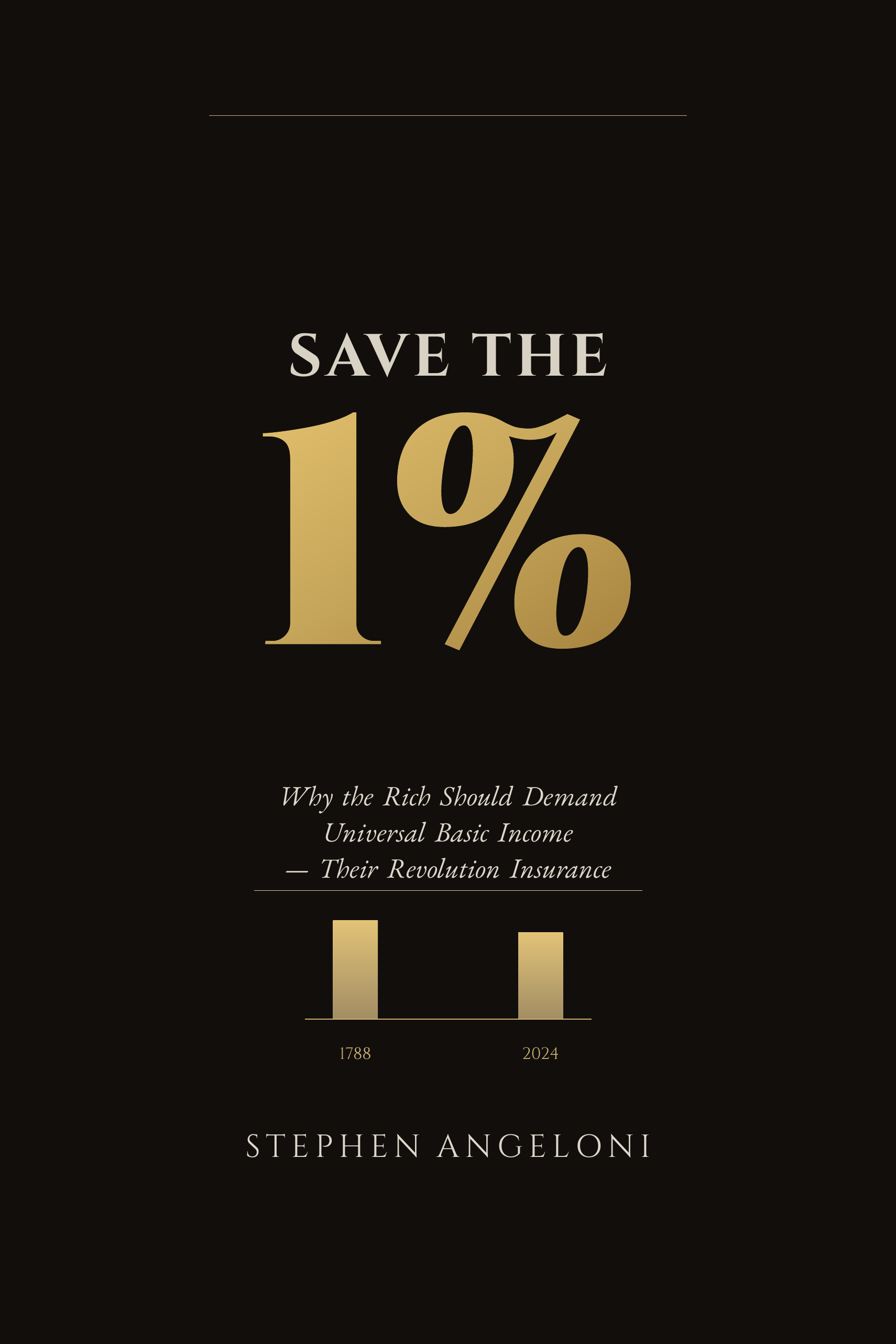
English
Save the 1%
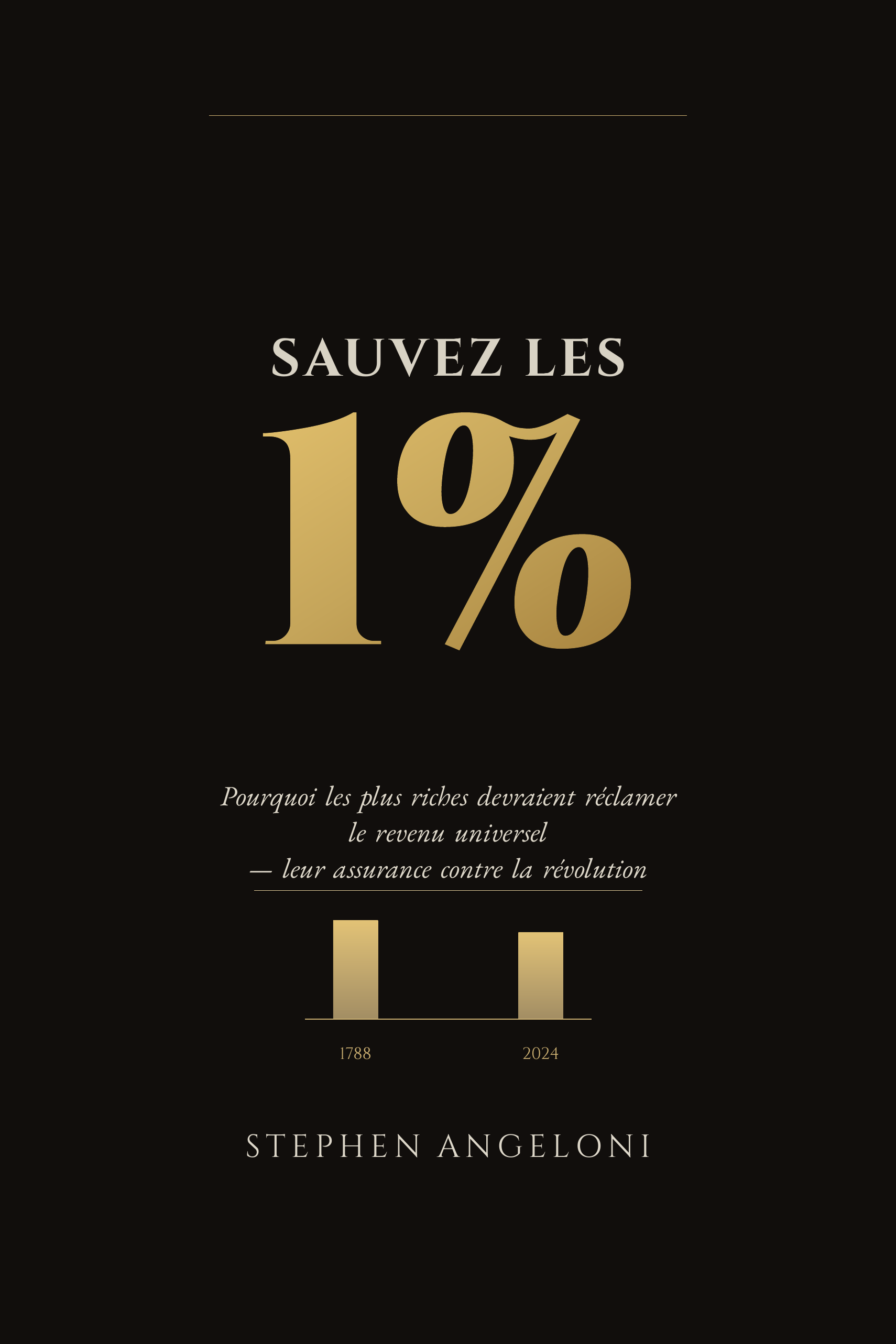
Français
Sauvez les 1 %
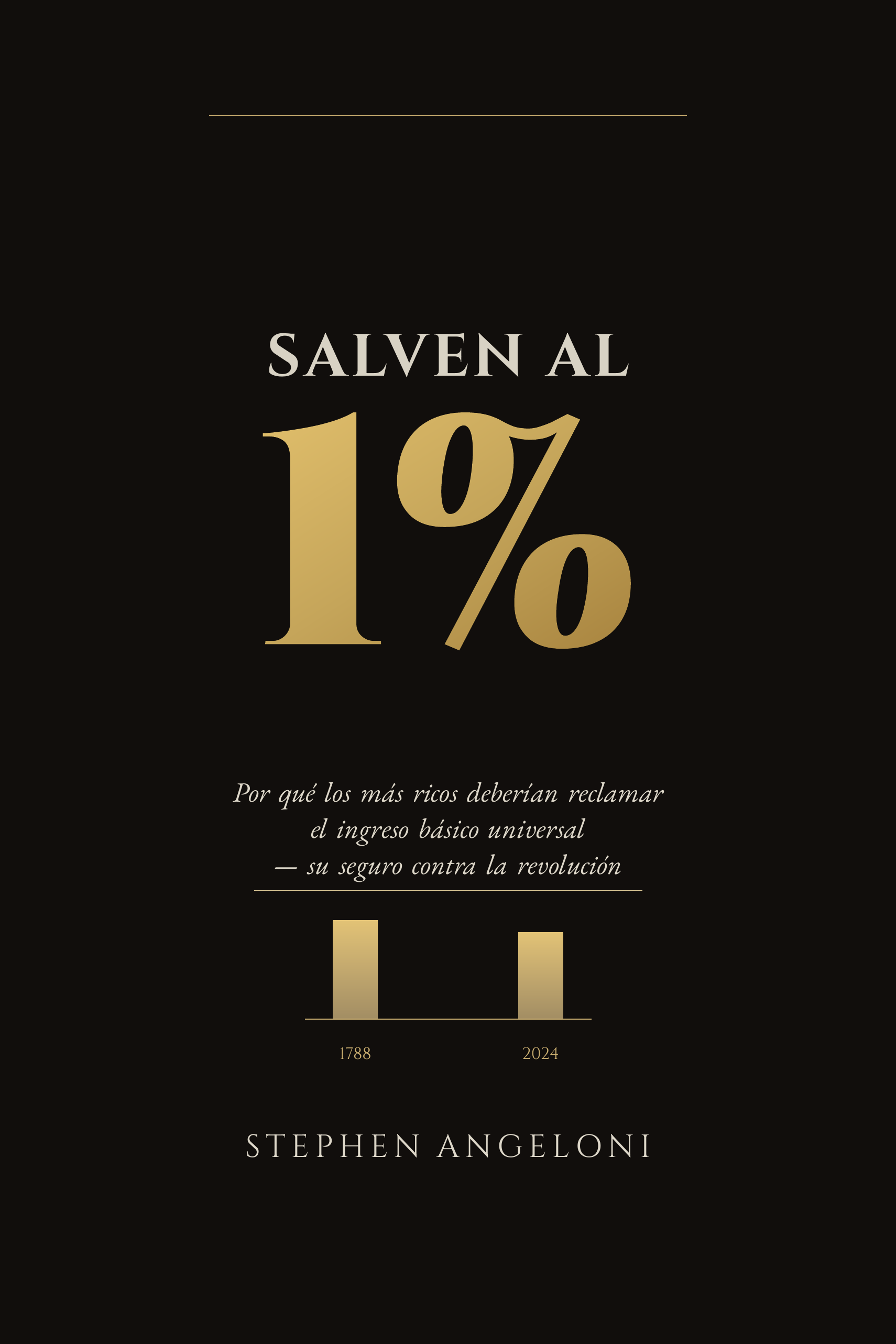
Español
Salven al 1 %
Each edition is a full translation, not an excerpt, reviewed line by line in its own language.
Save the 1% argues that Universal Basic Income is the cheapest insurance policy the wealthy will ever buy. Published in English, French and Spanish on 15 September 2026, it is available in Kindle, paperback and hardcover editions.
Every civilization that concentrated wealth past a critical threshold collapsed. The pattern has held for twenty-seven centuries. Artificial Intelligence is accelerating the next one.
The book makes the counterintuitive case for taxing the top to save the top, built on fiscal data from five countries, game theory, and the historical record. Every source cited, every calculation shown.
The essays at savethe1percent.substack.com are the work in public. The book is where it all comes together.
Three Editions
English
Save the 1%
Français
Sauvez les 1 %
Español
Salven al 1 %
Each edition is a full translation, not an excerpt, reviewed line by line in its own language.
The English Edition
979-10-986842-0-3979-10-987703-2-6979-10-986842-1-0Where It Stands
Available worldwide through Amazon and major ebook retailers.
The Author

Author portrait: AI-generated from a photograph.
Choose a format
Amazon offers Kindle, paperback and hardcover. For essays and future work, subscribe free.